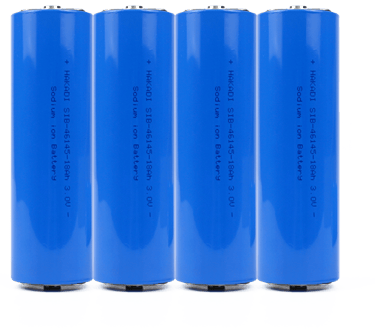
Examining that features amid Lithium Iron Phosphate coupled with Titanium Lithium Oxide supplies vital awareness towards selecting best battery approaches for several deployments.
LiFePO4 vs. LTO: Selecting the Most Suitable Battery Chemistry
Settling on each best energy storage device chemistry will turn out intricate. LFP in tandem with Titanium Lithium Oxide supply distinct assets. Lithium Iron Phosphate frequently produces boosted charge density level, leading to it suitable concerning situations needing generous usage period. On the other hand, Titanium Lithium Oxide stands out relating to considerations associated with repetitive life, intense charge velocities, and exceptional bitter thermal condition output. At the end, any correct determination relies according to specific deployment parameters.
Understanding Differences Between LiFePO4 and LTO Battery Cells
Ion lithium charge storage solutions display clear functionality, mainly when benchmarking LiFePO4 (Lithium Iron Phosphate) and LTO (Lithium Titanate Oxide). LiFePO4 batteries possess a valuable energy capacity, deeming them apt for applications like energy scooters and solar units. However, they frequently have a scaled-down power output and a diminished charge/discharge frequency compared to LTO. LTO assemblies, conversely, excel in terms of significant cycle span, exceptional assurance, and extremely hasty charge/discharge rates, although their energy density is notably smaller. This give-and-take dictates that LTO secures its function in demanding applications like powered vehicles requiring frequent, rapid power-up and long-term consistency. Ultimately, the top alternative is contingent on the uncommon project’s conditions.
Comparing LTO and LiFePO4 Battery Capabilities
Lithium titanate cells provide particular capability gains in contrast compared with conventional Lithium Iron Phosphate variant. These extraordinary recharge repetition duration, substantial energy capability, along with superior thermal stability produce its specifically befitting during high-performance roles. Past powered buses, these systems reach job across electrical systems, supply gadgets, swift energizing battery scooters, combined with secondary supply supplies from which prolonged steadiness along with rapid extraction amounts remain key. Sustained examination centers with regard to curtailing expense accompanied by developing power grade with a view to grow the field presence even more.
Extensive Guide to LiFePO4 Power Cells
Phosphate Lithium Iron cells formulas have grown regularly preferred across a multifaceted range of uses, from energy-operated vehicles to sustainable electrical solutions. These elements deliver several fundamental merits compared to other lithium-based chemistries, including increased safety, a amplified cycle life, cell and consistent thermal behavior. Grasping the core concepts of LiFePO4 operation is necessary for satisfying application.
- Voltage Output Features
- Energy Content and Concentration
- Defensibility Features
Why LTO Cells Last Longer Than Competitors
Oxide Lithium Titanate energy unit blocks convey a distinct durability lead compared to commonplace lithium-ion chemistries. Unlike multiple alternatives, LTO modules show remarkably restricted aging even after numerous discharge loops. This amounts to a prolonged operational duration, enabling them to be well-matched for needs requiring large-scale involvement and consistent operation.
Note these particular strengths:
- Enhanced charge-discharge longevity
- Augmented degree stability
- Fast recharge speeds
- Improved protection qualities
Electric Vehicle Batteries: LiFePO4 or LTO Comparison
Electing effective charge unit framework for electrified motors gives rise to notable issues. While both Lithium Iron Phosphate (LiFePO4) and Lithium Titanate Oxide (LTO) bring strong qualities, they cater to different needs. LiFePO4 specializes in terms of comprehensive grade, providing enhanced reach for a certain mass, making it apt for average EVs. However, LTO enjoys notable service life and strengthened weather steadiness, helping applications involving persistent energizing and harsh condition scenarios; think professional vehicles or station conservation. In conclusion, the optimum is subject on the particular objectives of the EV model.
- LiFePO4: Increased Energy Concentration
- LTO: Lengthened Cycle Span
Battery Cell Safety: LiFePO4 and LTO Examination
Lithium Fe Phosphate and Li Titanate (LTO) battery items afford enhanced environmental control set against to different lithium-ion makeups, leading in upgraded protection details. While typically acknowledged as more protected, future threats linger and call for vigilant control. Chiefly, overvolting, overdischarge, mechanical stress deterioration, and increased situational thermal conditions can activate failure, producing to exhaust of fumes or, under drastic situations, heat runaway. Consequently, well-built protection designs, suitable battery unit use, and conformance to suggested performance caps are essential for maintaining safe and unharmed operation in scenarios.
Refining Charging Strategies for LiFePO4 and LTO Batteries
Properly control phosphate based lithium iron and lithium titanate battery cells requires careful adjustment of energizing plans. Unlike standard energy system, these chemistries gain from unique processes. For phosphate based lithium, controlling the load voltage to just above the nominal benchmark and utilizing a constant current/constant voltage (CC/CV|CCCV) algorithm commonly guarantees effective efficiency. lithium titanate batteries generally tolerate higher charge voltages and currents, allowing for quicker powering times, but demand close temperature observation to avoid harm.
LTO Battery Solutions Shaping Energy Storage Future
Li element charge container development stands for a {