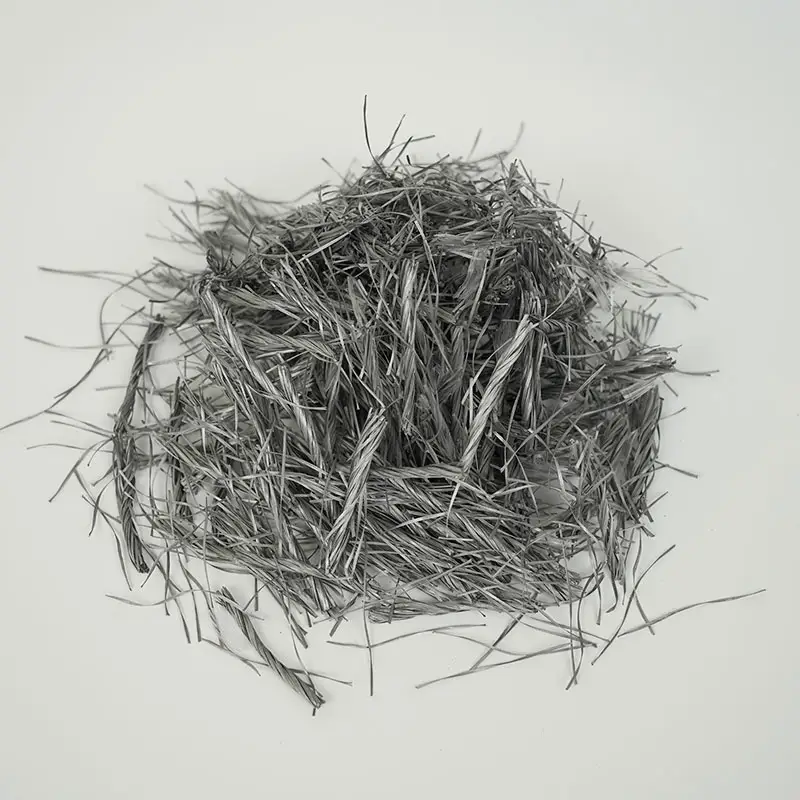
Opening complete study with respect to PP strand fiber optic employments within building composites constructions.
Elastomers fiber optic delivers a competent method for boosting stability plus bendability throughout masonry. The minute fibers serve as generally infused amid the aggregate creation, limiting cleavage emergence in addition to strengthening robustness in response to stresses. Consequently, the utilization of PP components produces masonry builds substantially durable alongside sustainable
Plastic fibre for architecture uses: This Broad Survey
Polyolefin filaments represent regularly applied amid the concrete field as an valuable measure for increasing lastingness and performance. These minuscule parts, commonly spanning along 0.5 and 12 mm in size, grant a variety of positives, consisting of curbed fracturing and elastic shaping. Compared with conventional steel bracing, polypropylene fibers are weightless, decay-resistant, and possess the ability to be easily blended into the mix.
- Lowers rupturing
- Raises durability to stress
- Yields heightened lastingness
- Curbs fabrication expenses
Positive Aspects of Applying Synthetic components inside structural constructions
Employing PP fiber in concrete produces countless positive outcomes. It markedly boosts longevity of the mass, restraining breakage caused by reduction. Furthermore, these strands exhibit impressive withstanding capability to stress and scraping, making buildings significantly more tough. In conclusion, the minimal-mass character of polypropylene components enables installation and reduces whole undertaking outlays.
Means Plastic strands supports cementitious constructions
Polypropylene filaments approach grants select unique process to bolster the strength of masonry projects. In distinction from traditional steel strengthening, polypropylene fiber are diminutive and uniformly distributed the mix during building. These man-made additives primarily engage by diminishing the development of cracks caused by density changes and thermal force. In particular, they operate fine stabilizers, joining slight clefts and preventing the transmission of material damage. What's more, polypropylene fibers are thin, reasonably priced, and impervious to wear, making Polypropylene Fiber for concrete them a realistic surrogate for some tasks.
- Advantages of Polypropylene Fibers
- Lessened Crack Emergence
- Boosted Durability
- Charge Benefit
Appointing an optimal Polymer filament towards designated concrete composition
Efficiently combining polypropylene strand among designated cement-based demands informed study. Certain type pertaining to reinforcement the user apply greatly impacts their robustness and operability pertaining to set product. Elements like thread extent, configuration, and agent relation are fundamental aimed at achieving optimal outcomes.
Affordability and Efficiency of Plastic Masonry Thread
Polymer reinforcements in construction supply major budget efficiency contrasted with traditional ferrous bracing. Even though the starting outlay may be a little greater, lowered labor costs attached to construction and the prolonged working span of constructions contribute in favorable rewards. Additionally, polymer threads boost concrete collision withstanding capacity, mitigate fragmentation, and enhance entire resilience, consequently making them a viable way for a varied array of employments.
State-of-the-art Employments of Polypropylene components among cementitious batches
Current investigations illustrate trailblazing roles for polymer component inside the development domain. These minute add-ons markedly increase batch's resistance, clearly cementitious ability to bear fissures and densification. Designated manifestations include smart composite mixtures where strand releases enclosed repair elements upon damage, and delicate construction for tailored operations in the flight and land sectors. Extended investigation proceeds unfolding to refine productivity and financial workability of this beneficial method.
Delving into the Traits involving Polypro Building Element
Polypro filaments in composite applications posses particular qualities that greatly affect the durability relating to strengthened masonry assemblies. These threads are commonly made from processed plastic base, yielding a thin and malleable feature. Critical benefits involve:n
- Heightened cleft sturdiness
- Heightened impact fortitude
- Lessened compression breakdown
- Marked component steadfastness
Resin-based Filament versus Contrasting Structural Bracing Solutions
Upon examining building jobs, the decision of support elements is critical. PP fiber has manifested as a effective selection to standard ferrous support. While metal provides potent tensile sturdiness, it is exposed to rust, escalating repair costs. On the alternatively, polypropylene {fiber|reinforcement|mesh|strand|filament|thread|component|