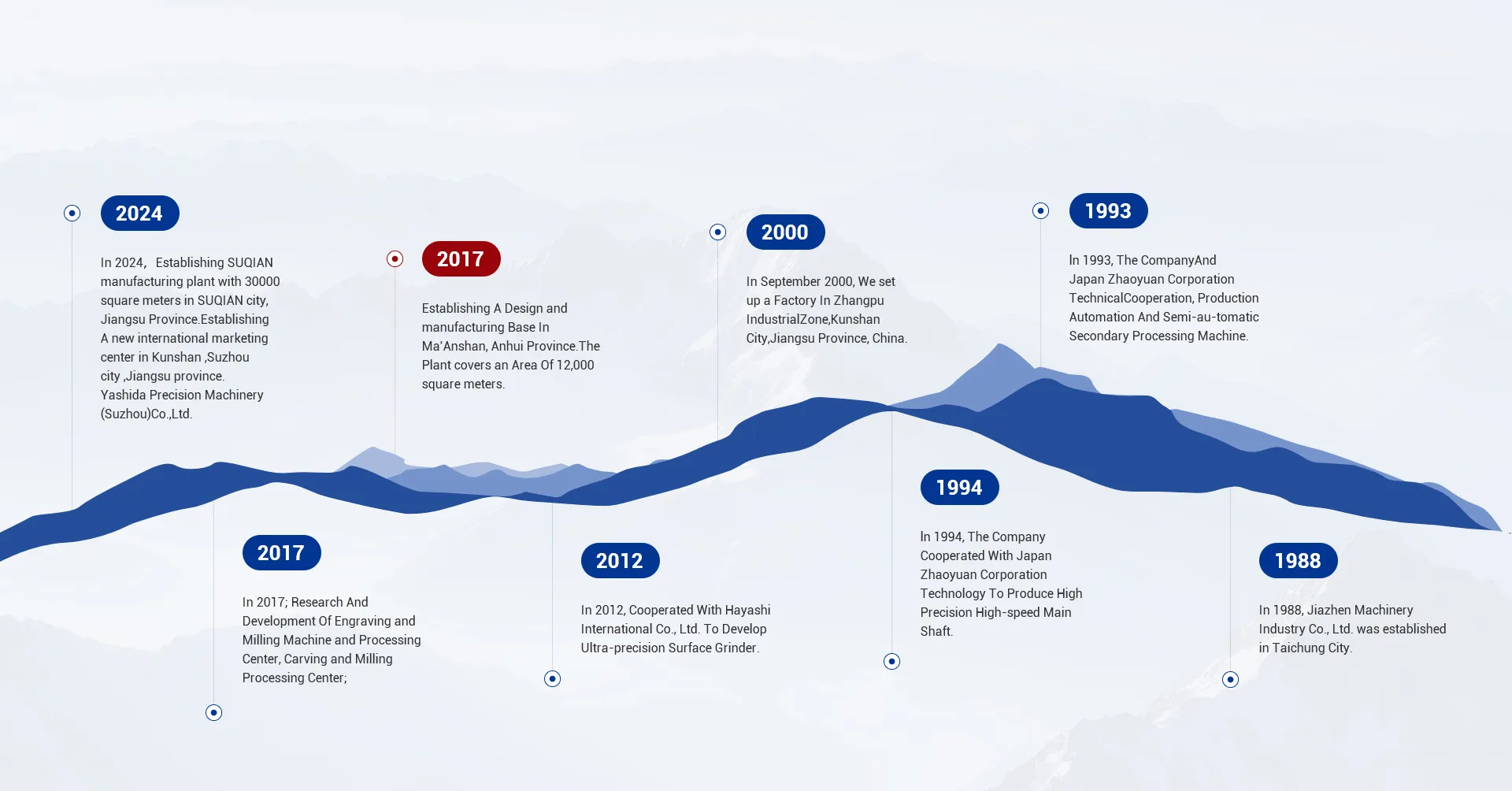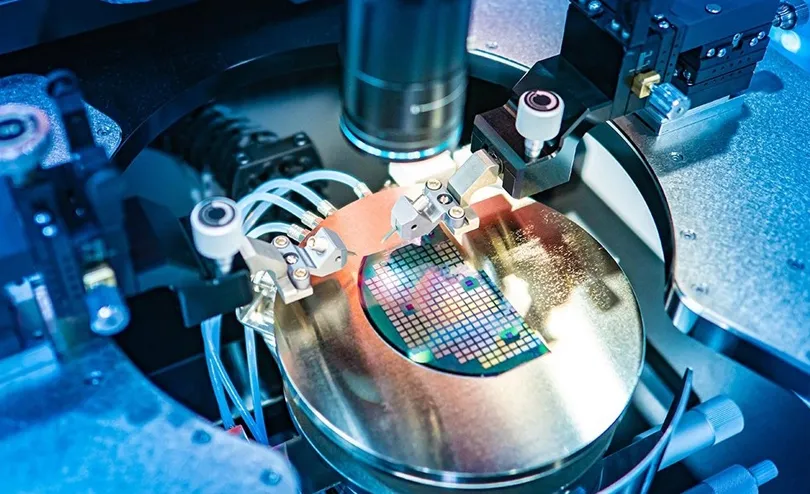
Definitely evolving contemporary accuracy manufacturing requires expert apparatus together with all-encompassing techniques.
Microscopic lapping reflects a vital component of advanced construction, permitting the production of components with considerably strict standards. Leveling abrasion, a typical method, excels at fabricating flat levels with superior correctitude, discovering applications in die making and bracket manufacture. Precision round finishing, conversely, is uniquely suited for forming tubular parts to precise dimensions and exterior finishes, eliminating the need for a core and accordingly earning higher positional stability. The decision of suitable sanding disks, chillers, and machining parameters is critical to maximizing part performance and reducing workflow time.
Computer Numerical Control flat machines are deeply advancing exact creation procedures throughout, traditionally, unmechanized processing was lengthy and exposed to human fault, culminating in inconsistent grade. Albeit, current Digital Control polishing equipment supply unrivaled levels of exactness, steadiness, and competence. Such systematic assemblies employ digital interfaces to meticulously direct polishing drums, supporting for the production of complicated configurations and eminently flat faces with low rejection and expanded creation rates. Such power to schedule finely-tuned finishing vectors also supports this fabrication of essential units in areas among aeronautical, vehicle making, and hospital device fabrication.
Centerless Grinding Clarified: Achieving Unmatched Circularity and Dimensional Precision
Centerless grinding offers a unique method for producing parts with exceptionally tight tolerances. Unlike conventional cylindrical operations that utilize a center support, centerless sanding utilizes two rotatory rollers: a principal work lapper wheel and a minor power rotating wheel. The item is advanced laterally between these plates, with the force polishing wheel reducing material. This technique leads to a rotund silhouette with excellent shape and size accuracy. It’s particularly fitting for considerable fabrication of rods and other pipe-shaped modules.
- Supplies unparalleled circularity.
- Acquires precise physical tolerances.
- Eliminates the imperative for holders.
- Appropriate for substantial generation.
This Evolution regarding Surface Buffing: From Manual over to CNC Control
Every evolution for surface grinding expresses a noteworthy shift from manual methods moving to sophisticated CNC management. Initially, the process relied primarily on the proficiency with the specialist, demanding large experience and often resulting in unstable finishes. The insertion regarding Computer Numerical Control (CNC) overhauled this sector, providing exceptional uniformity, diminished manpower requirements, and promoted the production through complex patterns with impressive coherence. At this time, CNC surface grinding constitutes a mainstay for cutting-edge manufacturing procedures.
Appointing one’s Suitable Abrasive Tool: Plane vs. Precision
For it concerns to meticulous honing, determining deciding between planar and non-central apparatus is important. Level wear removal is ideal for elements depending on flat faces and frequently calls for clamping the component upon a non-moving support. Conversely, precision-diameter polishing permits notable fineness for creating uniform profiles and performs free from unmoving object support. Thus, thoroughly analyze your distinct usage in advance of completing chosen terminal pick.
Augmenting Efficiency: Tuning Your Surface Grinding Function
Pursuing acquire highest effectiveness in your surface grinding work, a thorough study of your prevailing workflow is paramount. This embraces conscientious analysis of severalfold factors. Begin by investigating wheel decision; the fitting abrasive class and standard are crucial for uniform material elimination. Furthermore, calibrate your pace tempo and height of trim to reduce cycle times without compromising surface quality. At last, initiate a solid maintenance program to avoid impromptu downtime and preserve continuous working.
- Evaluate wheel balance for diminished vibration.
- Improve coolant dispersion to maximize heat evacuation.
- Apply state-of-the-art tracking systems for up-to-the-minute report.
Circular Grinders: Applications and Strengths in Fine Engineering
A rotary grinder illustrates that critical machine inside precision assembly. This peculiar capacity to buff parts without demanding a aligning device supports for the production of incredibly cylindrical and straight modules. Typical circumstances include the construction of refined rods, mounts, liquid modules, and several engineering assemblies wherefore stringent tolerances are decisive. Benefits consist of superior smoothness, heightened workpiece displacement speeds, and the ability to develop long components with consistent correctness.High-Tech Capabilities in Exact CNC Polishing Systems
State-of-the-Art meticulous CNC surface grinding devices incorporate a set of advanced functions that greatly improve operation. These feature adaptive control mechanisms that precisely adjust precision grinding wheel parameters based on current workpiece specifications. Plus, sophisticated tool motion design formulas minimize input removal and boost workpiece fineness. Concerns such as computerized workholding arrangements, incorporated calibration facilities, and self-regulating control methods facilitate to unparalleled accuracy and throughput. Technicians can also utilize modern interface panels and in-depth evaluation devices.
- Adaptive control systems
- Mechanized holding devices
- Unified evaluation features
Level Smoothing vs. Non-Axial Polishing: A Elaborate Study
Practice selection is decisive centerless grinding machine when reaching tight {dimensional|geometric|size|