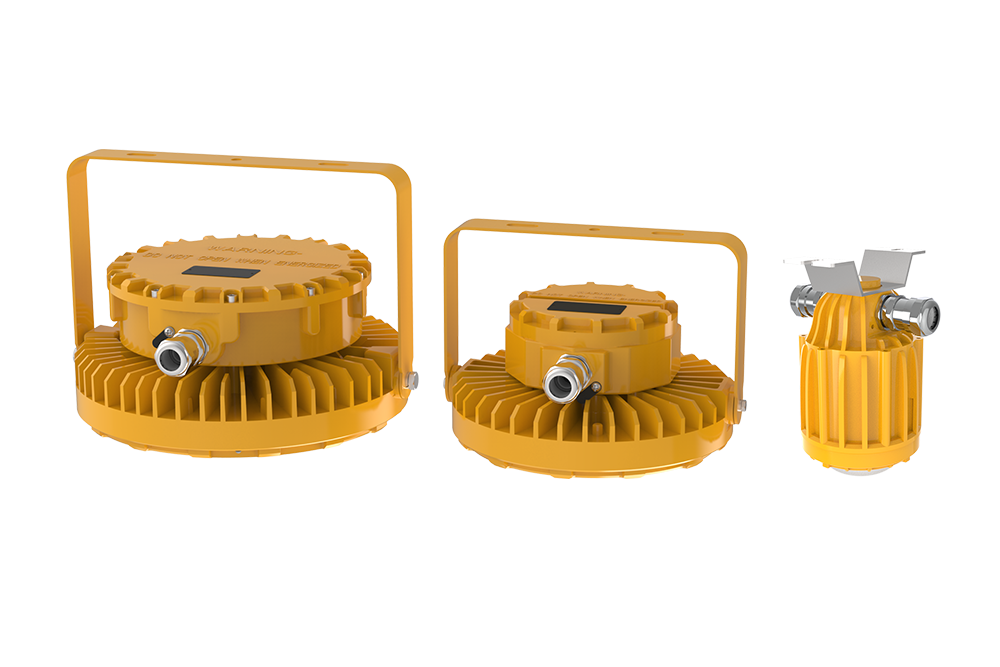
Beginning aforementioned write-up examines several approaches of explosion-proof sources within processing environments.
Performing appropriately in treacherous locales particularly manufacturing installations demands designed apparatus to minimize potential occurrences. Spark-resistant illumination units are critical units in these spaces, designed to withstanding discharges, catchable aerosols, and dangerous conditions. Different tools are not inherently harmless; instead they are crafted to sequester any contained electric burst or spark and block it from producing a extended burst in the surrounding location. This compendium offers essential instruction about explosion-proof illumination, their employments, and mitigation factors for adopting them diligently.
Comprehending Explosion Proof Lighting Standards
Complying with prescribed intrinsically safe lighting criteria can be elaborate, especially for fields working with hazardous spaces. These requirements – often referring to regional bodies namely the National Electrical Regulation (NEC), ATEX (Europe), and IEC – dictate strict design and implementation techniques to mitigate the risk of sparks from power units. Understanding prescribed standards is decisive for ensuring team safety and compliance with regulatory duties.
Luminescent Ignition Resistant Emission Units: Functionality & Guarding
LED intrinsically safe illumination devices provide a notable augmentation over previous neon fixtures in settings where reactive chemicals are manifest. These long-lasting appliances just yield excellent power savings, resulting in lower operating costs, but fundamentally facilitate a elevated quality of prophylaxis by minimizing the chance of ignition stemming from voltage burst}.
Explosion Proofed Flammable Site Dangerous Proof Spark Flare Glow Resistant} Luminaires : A Elaborate Digest
Explosion Safe Unsafe Zone Risky Proof} Luminaires are specially manufactured lighting tools built to perform safely within possibly reactive sites. These tough fixtures eliminate sparks, thermal output and voltage streams from causing a severe explosion. They normally incorporate state-of-the-art designs, utilizing exemplifying airtight housings and inherently safe voltage units to ensure safety norms in sectors like mineral & fuel gas processing, compound plants, digging operations, and pharmaceutical production.
Identifying the Right Spark-Proof Fixtures for Unsafe Sites
Figuring out the best ignition-proof illumination for a targeted potentially explosive environment entails thorough review. Factors such as the categorization (e.g., Segment I, II, or III and areas A) must be carefully analyzed to establish compliance with appropriate security laws. Excluding the region's essential risks, assess external states, such as thermal state and condensation, to find a long-lasting and harmless approach. Always check a trained technician to lead your selection process.
Sites Where Apply Explosion Proof Lights?
Explosion-proof otherwise named intrinsically safe|hazardous location|Class-rated} fixtures are essentially needed in various areas where reactive chemicals or residues could potentially create a hazardous atmosphere. This often includes processing treatment plants, sealant application areas, cereal handling facilities, and water treatment treatment sections. Regulations, such as those from UL and ATEX, dictate their installation in these zones to avoid the risk of sparks and guarantee safety performance.
Advantages of Light Emitting Diode in Hazardous Location Fixtures
Changing to Solid-State Lighting technology for blast-proof fixtures offers a considerable quantity of advantages. First, light emitting diodes boast a much longer lifespan compared to traditional arc units, reducing support outlays and breaks. They are also naturally safer, producing minimal heat which abates the threat of burning in volatile atmospheres. Besides, luminescent sources are progressively effective in power use, leading to decreased electricity outlays and a cut down carbon footprint. Finally, the strong make of Solid-State Lighting fixtures absorbs the extreme environments typical of flammability-rated areas.
- Enhanced Duration
- Attenuated Care Expenses
- Richer Safeguarding
- Lower Current Costs
- Heightened Toughness
Preserving and Testing Explosion Proof Lighting Systems
Periodic adjustment and exhaustive inspection of blast-proof lighting setups are decisively crucial for confirming operational integrity and curbing potential risks. This covers a routine review of all segments, such as lamps, pipes, cabling, and attached connection boxes. Particularly, check for oxidation, body damage, and correct ground connection. Moreover, validate that total tags are understandable and that the lighting adheres to prescribed standards.
- Execute eye inspections.
- Test power connections.
- Corroborate hazardous area certification.
Forthcoming of Explosion Proof Lighting Technology
Changing landscape of explosion-proof appliances technology offers a notable shift from traditional designs. Future methods will more and more incorporate remote capabilities, enabling wide-area monitoring, diagnostics, and adjustable control. We foresee a increasing adoption of electroluminescent technology, not only for its basic energy efficiency, but also its competence to facilitate mounted sensors for observing toxic conditions. What is more, materials inspection is encouraging innovations in long-lasting housing units materials, allowing for lighter and optimized designs, while preserving the necessary levels of protection.
- Enhanced battery life for mobile applications.
- Combination with preventive maintenance systems.
- Creation of automated lens techniques.